
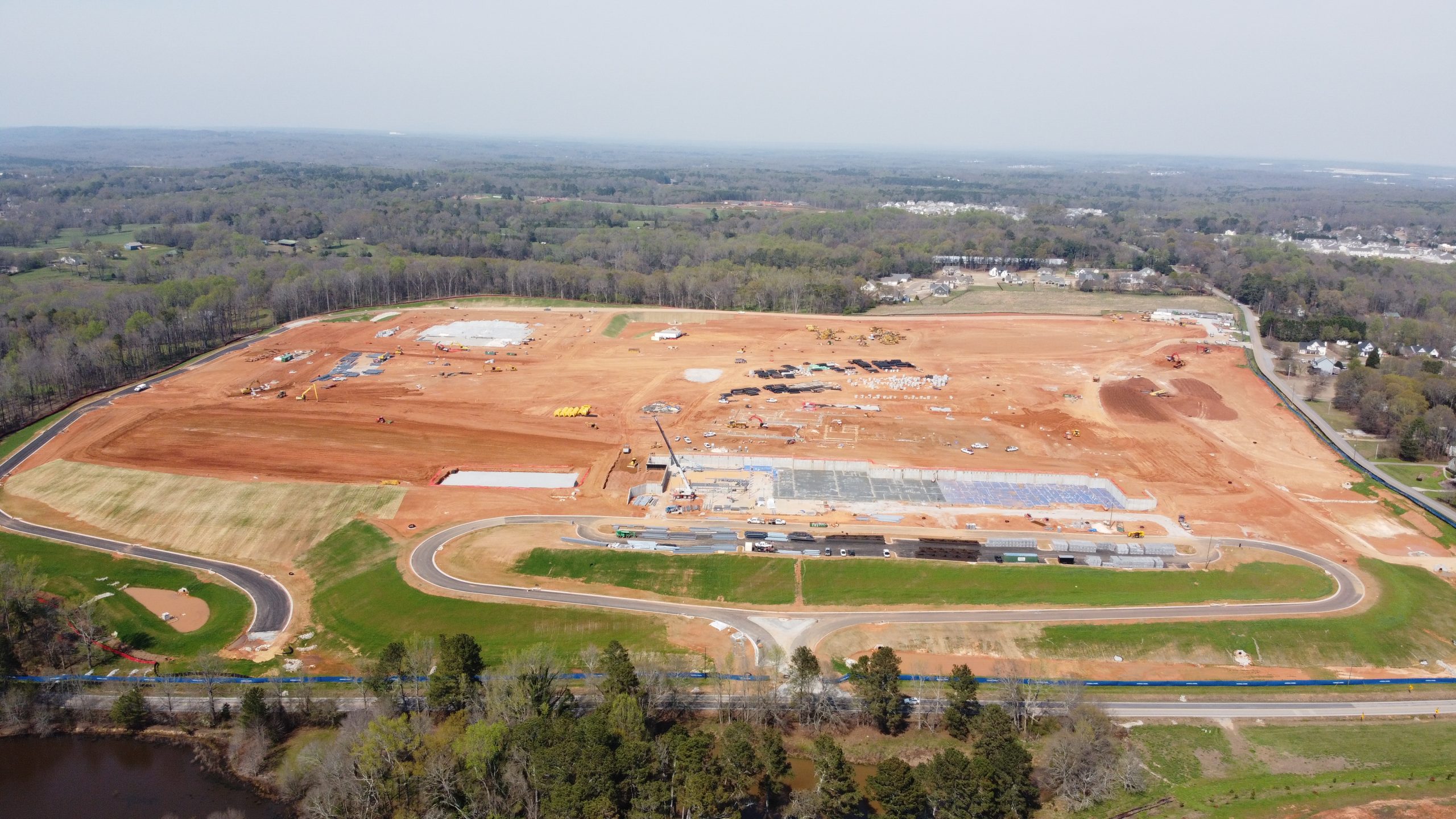
The landscape for land investment in Northeast Georgia is being redefined by what lies beneath the soil. While road improvements often get the headlines, it is the strategic expansion of water and sewer infrastructure that acts as the true catalyst for property value and development potential. Along the vital I-85 and GA-316 corridors, utility expansion is dictating where the next generation of residential and industrial growth will occur.
“Every dollar spent in constructing an average water/sewer project generates almost $15 of private investment and adds $14 to the local property tax base.” — Economic Research Service (USDA) and the Collins Center for Public Management
For decades, much of Northeast Georgia was limited by “perk tests.” If the soil couldn’t handle a septic system, the land couldn’t be developed. Municipal sewer changes the math entirely. By removing the need for large drain fields, sewer access acts as a density multiplier. Municipalities in Northeast Georgia are aggressively expanding utility infrastructure in 2026 to capitalize on a rare alignment of federal funding and unprecedented regional growth. The Bipartisan Infrastructure Law (Infrastructure and Jobs Act), signed in November 2021, is a $1.2 trillion, five-year investment to rebuild critical infrastructure, including $188 billion for utility improvement.


Public investment acts as a massive “force multiplier” for the local economy. According to research from the USDA Economic Research Service and the Collins Center for Public Management, the impact of municipal utility spending is staggering:
Private Investment: Every $1.00 spent on public water and sewer infrastructure generates nearly $15.00 in private investment.
Tax Base Growth: That same dollar adds approximately $14.00 to the local property tax base.
Wrapping Up with Key Insights
Sustained in-migration to the Northeast Georgia Region driven by growth in Atlanta, and a coordinated effort at the State level to attract new business opportunities has the potential to transform the I-85 and GA-316 corridors into high capacity industrial and residential corridors. Modern infrastructure, particularly the expansion of municipal water and sewer lines, is currently the most significant driver of land value and marketability in Northeast Georgia.